


woohoo... so, you already know what is a staff, what are the different types of notes, how to locate the keys, what are the pitch names of each key, how to read notes, blah blah blah wow dami nang alam ah... :) so for our next topic, let me guide you on how to read those notes while playing them on piano using your left hand, right hand and both hands...
but first let's review the Notes and Rests

madali naman sigurong tandaan ang mga notes and rests na ito and its equivalent count values. always remember that nakasalalay sa time signature kung ilan ang total number of count values or beats in a given measure regardless of the number of notes and types of notes, combination of notes and rests present basta ang total count nila dapat eh based sa hiningi ng time signature...
for instance:

time signature is 4/4 which means there 4 beats in a measure, quarter note receiving that one beat. or you could just simply interpret it as a measure having a total count value of 4. so kahit paghaluhaluin mo yung rests/notes if you get their sum, the total should be 4 (in each measure yan unless there's a change in time signature.... just substitute the symbols from notes to rests, same din ng gagawin) ayos?! let's now start on how to play the piano....
RIGHT HAND FIRST
bago yan... let's begin playing the piano using piano fingering.

Question: why do i need to know all of these?
Answer:
hindi porket may idea ka na kung paano basahin ang piyesa, eh kaagad-agad mo itong matutugtog. 'wag masyadong excited! lelz kung gusto mong matuto ( kahit in a short span of time ), eh mejo kelangan mo talaga magtiyaga. so, mabalik ako sa tanong bakit mo ito kailangan malaman, bakit kelangan pang gamitin ang piano fingering?! for your hand coordination. it enables your fingers to execute new techniques, master awkward positions, and exercise speed and flexibility. it keeps your hands in the correct position and prevents you from losing your place on the keyboard. mejo sa una talaga nakakatamad, nakakapagod, paulit-ulit grrrrrr.... well, practicing fingering may seem tedious but stick with it, your fingers will adjust quickly.
alam mo bang ang daming nahihirapan pasunurin ang mga daliri nila sa pagtugtog ng piano hahaha... lalo na kung mejo hindi mo ito nasimulan i-train noong bata ka pa... kaya kelangan natin itong isa-isahin para masanay na ang mga daliri mo sa pagtugtog ng piyesa at hindi papindot-pindot ng paisa-isa na parang nagta-type sa typewriter or pc keyboard. aba isipin mo nalang if paisa-isa mong ipi-play ang song na paano na kaya ni bugoy... for sure 3010 na bago mo matapos yon... kaya sumunod ka nalang, magbasa at namnamin ang lahat ng ito :) alright go!
Note: for starters, when reading a music sheet or piano piece, ALWAYS start looking for the CLEF being used, KEY SIGNATURE, TIME SIGNATURE. also note that when you can't see a written TIME SIGNATURE after the CLEF symbol understood kung ano yung time signature na nakalagay at the beginning of the staff yun ang gagamitin... not unless nabago ang TIME SIGNATURE as you play along the piece... kung walang nabago eh 'di masusunod parin ang unang clef symbol na nakita mo from the beginning ng piece... then locate your MIDDLE C sa piano. with the correct posture and hand position play the note as you read them going to your right... parang nagbabasa ka ng libro... pa-kanan din ang pagbasa ng piyesa. kahit japanese ka pa... going to your right pa rin ang pagbabasa ng notes... hehehe no exceptions! :)
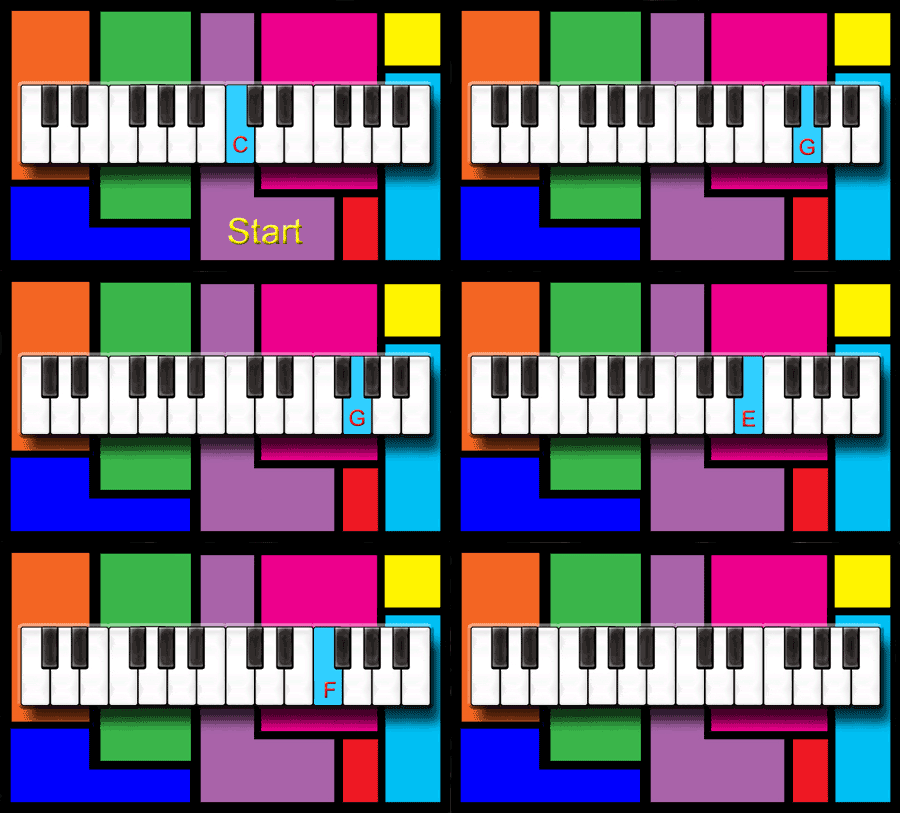
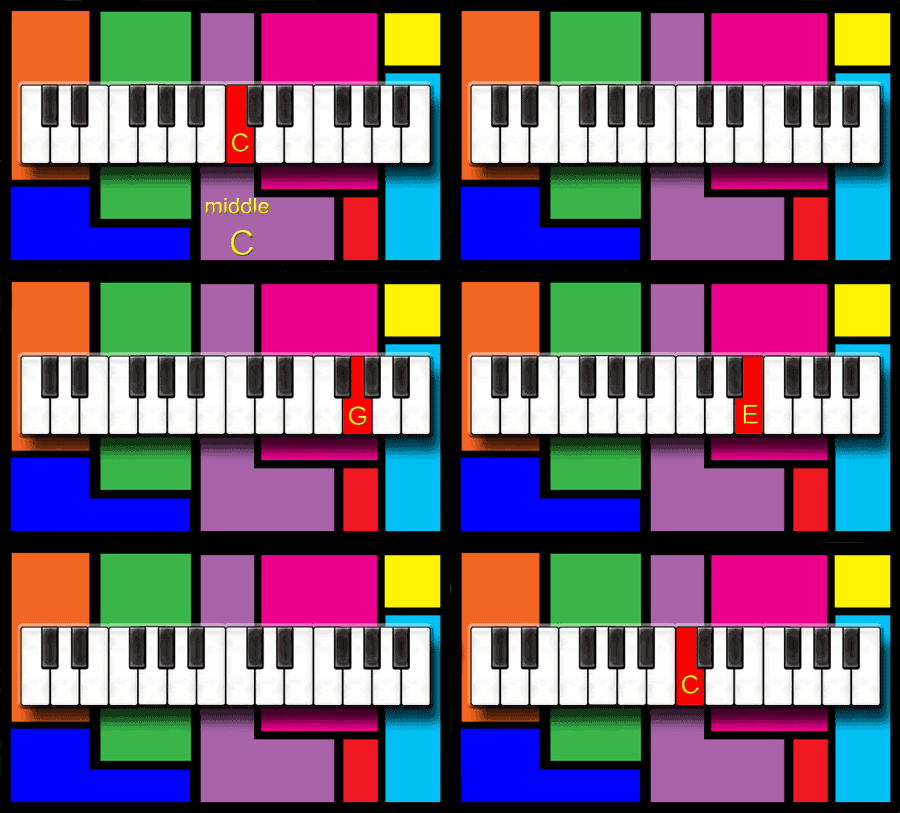
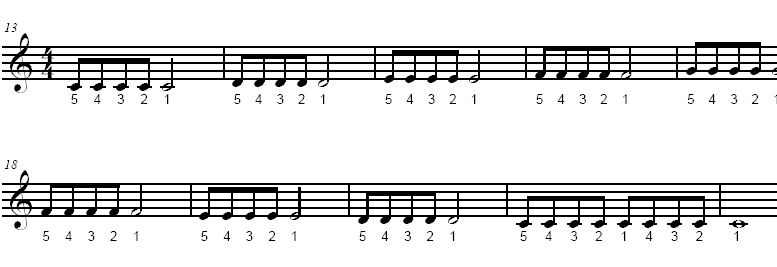
the notes are played by using your finger(s), pressing a key and counting the beats as you play (counting the duration equivalent of that certain note before playing another key). Try to relax when you are playing and be prepared to play everything at a snail's pace until you and your fingers are ready to move on. do try to observe the .gif that i've provided on each exercises to see kung tama nga yung notes na tinutugtog mo sa piano.
for instance:
but first let's review the Notes and Rests
Figure 3a.1.a
Notes and Restsmadali naman sigurong tandaan ang mga notes and rests na ito and its equivalent count values. always remember that nakasalalay sa time signature kung ilan ang total number of count values or beats in a given measure regardless of the number of notes and types of notes, combination of notes and rests present basta ang total count nila dapat eh based sa hiningi ng time signature...
for instance:
figure 3a.1.b
time signature is 4/4 which means there 4 beats in a measure, quarter note receiving that one beat. or you could just simply interpret it as a measure having a total count value of 4. so kahit paghaluhaluin mo yung rests/notes if you get their sum, the total should be 4 (in each measure yan unless there's a change in time signature.... just substitute the symbols from notes to rests, same din ng gagawin) ayos?! let's now start on how to play the piano....
RIGHT HAND FIRST
bago yan... let's begin playing the piano using piano fingering.
Figure 3a.2.
note:
piano fingering refers to finger placement and the finger techniques used to play the piano. on the other hand, fingered piano music marks each note with number that corresponds to one of the five fingers... at maraming nalilito dito kasi depende sa naging approach ng piano teachers ( i don't know paano nila tinuturo yun sa students nila... i'm curious though hahaha ) but madalas, the numbers that you see on a given sheet music are intended for you to know which finger you'll use on a certain note, not a number corresponding to a certain key.... ( example hindi ganito: note C = finger no. 1; note D = finger no. 2; note E = finger no. 3; note F = finger no. 4; note G = finger no. 5 eh paano na yung note A, B and C anong finger pa gagamitin doon? toes?! hahaha nakooooo just follow the picture above figure 3.1.a ganyan dapat! starting from number 1 on both your right/left thumb )Question: why do i need to know all of these?
Answer:
hindi porket may idea ka na kung paano basahin ang piyesa, eh kaagad-agad mo itong matutugtog. 'wag masyadong excited! lelz kung gusto mong matuto ( kahit in a short span of time ), eh mejo kelangan mo talaga magtiyaga. so, mabalik ako sa tanong bakit mo ito kailangan malaman, bakit kelangan pang gamitin ang piano fingering?! for your hand coordination. it enables your fingers to execute new techniques, master awkward positions, and exercise speed and flexibility. it keeps your hands in the correct position and prevents you from losing your place on the keyboard. mejo sa una talaga nakakatamad, nakakapagod, paulit-ulit grrrrrr.... well, practicing fingering may seem tedious but stick with it, your fingers will adjust quickly.
alam mo bang ang daming nahihirapan pasunurin ang mga daliri nila sa pagtugtog ng piano hahaha... lalo na kung mejo hindi mo ito nasimulan i-train noong bata ka pa... kaya kelangan natin itong isa-isahin para masanay na ang mga daliri mo sa pagtugtog ng piyesa at hindi papindot-pindot ng paisa-isa na parang nagta-type sa typewriter or pc keyboard. aba isipin mo nalang if paisa-isa mong ipi-play ang song na paano na kaya ni bugoy... for sure 3010 na bago mo matapos yon... kaya sumunod ka nalang, magbasa at namnamin ang lahat ng ito :) alright go!
Note: for starters, when reading a music sheet or piano piece, ALWAYS start looking for the CLEF being used, KEY SIGNATURE, TIME SIGNATURE. also note that when you can't see a written TIME SIGNATURE after the CLEF symbol understood kung ano yung time signature na nakalagay at the beginning of the staff yun ang gagamitin... not unless nabago ang TIME SIGNATURE as you play along the piece... kung walang nabago eh 'di masusunod parin ang unang clef symbol na nakita mo from the beginning ng piece... then locate your MIDDLE C sa piano. with the correct posture and hand position play the note as you read them going to your right... parang nagbabasa ka ng libro... pa-kanan din ang pagbasa ng piyesa. kahit japanese ka pa... going to your right pa rin ang pagbabasa ng notes... hehehe no exceptions! :)
the notes are played by using your finger(s), pressing a key and counting the beats as you play (counting the duration equivalent of that certain note before playing another key). Try to relax when you are playing and be prepared to play everything at a snail's pace until you and your fingers are ready to move on. do try to observe the .gif that i've provided on each exercises to see kung tama nga yung notes na tinutugtog mo sa piano.
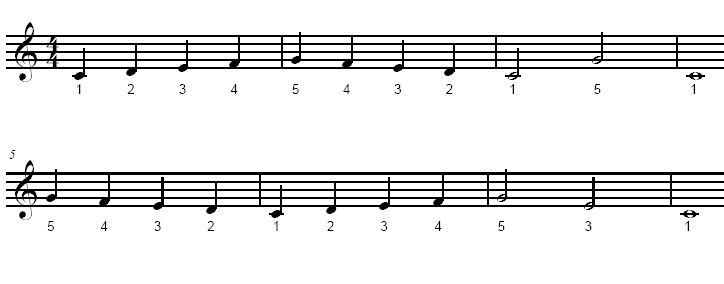
EXERCISES
Figure 3a.3.a
(click the picture to view the whole piano excercise)Figure 3a.3.b
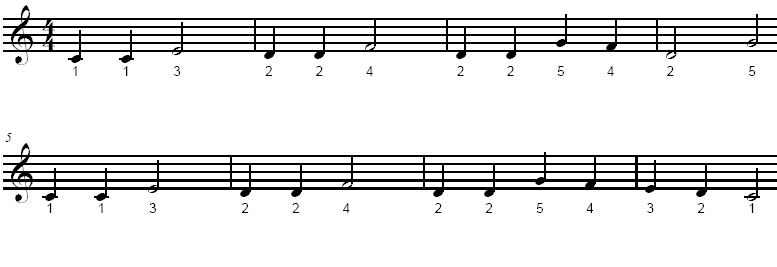
(click the picture to view the whole piano exercise)
(click the picture to view the whole piano exercise)
note:
please note that your five fingers are not limited to playing only the same notes per finger (1=C 2=D 3=E 4=F 5=G hindi ganyan ang meaning nung mga numbers huh....) don't get confused... kaya nga fingering... hindi porket 2 ang nakalagay sa RE or D note eh laging finger number 2 lang ang pdeng gamitin... pdeng paiba-ibang fingers depende sa kung ano ang naka-indicate sa piyesa... nasa-isip lang ang pag-count ng beats while you use your fingers to play them. also, 'wag kang mandaya in playing these sample exercises. hindi naman ako ang dinadaya mo kundi sarili mo... hehehehe you want to learn so follow these things na nilagay ko or better yet do your own lesson na lang... okie?!?! ^_^vfor instance:
Figure 3a.3.c
( click the picture to view the whole exercise )just keep on practicing especially yung proper piano fingering... dahil magagamit mo yan kung maka-encounter ka ng piano piece na may numbers sa notes and para masanay din gumalaw-galaw ang mga daliri mo habang hindi mo pa kinakailangang gumamit ng flanax nyhahhahaha ^_^v
kung okay na si right hand... we'll now move on to the next... Piano Lesson No. 3b: Piano Playing: Left Hand


if you liked this post feel free to share...
c'mon don't be shy :)
kung okay na si right hand... we'll now move on to the next... Piano Lesson No. 3b: Piano Playing: Left Hand
 |  |  |
if you liked this post feel free to share...
c'mon don't be shy :)


 donate
 terms & privacy policy
 2k9-2k16 ºheideabotº .all rights reserved.